Grain Size Distribution
If starting the tutorial with this unit, start with setting the project folder as described here. The visualization settings used in this tutorial are described here.
The GrainFind module analyzes the solid volume percentage, shape, and diameter distribution of the grains in the microstructure. This information is needed to build a statistical digital twin. Find the results of this analysis here.
|
Note! For more information about the parameters and results of the Identify Grains command refer to the GrainFind User Guide. |

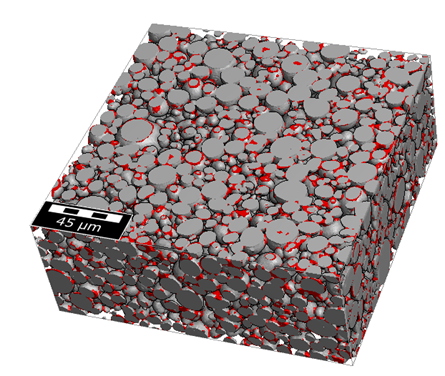
- If it is not loaded anymore, load the structure model obtained from identifying binder in the previous unit of this tutorial. For this, select File → Open Structure (*.gdt, *.gad) from the menu bar. In the Results-User folder from the IdentifyBinder folder select the GeoDict structure file labeledStructure.gdt and click Open. If Identify Binder was not run, load the labeled structure file from the Results-M2M folder inside the tutorial folder.
- Select Analyze → GrainFind in the menu bar.
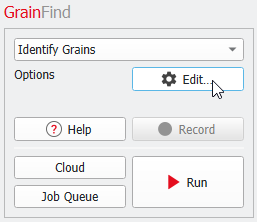
- In the GrainFind section, left from the visualization area, select Identify Grains from the pull-down menu, and click Edit.
- In the opening dialog, under the Grain Segmentation tab, change Minimum Grain Diameter to 4 voxels (1.48 μm).
- Select Chosen Material IDs from the pull-down menu for Material to Analyze and select 1 from the material pull-down menu.
- In the Grain-Fragment Reconnection panel change the Interface Threshold to 16.
- Click OK in the dialog and then, click Run in the main GeoDict GUI. The identification of grains runs less than one minute.
|
Note! The identification produces the file IdentifyGrains.gdr and the folder IdentifyGrains. The results will be used to compare the original data set with the statistical digital twin, created in the next part of this tutorial series Building a statistical digital twin of a cathode material. |