The Academic Innovator Program
Hidden Gems series, Artikel #5
erstellt von Anton Du Plessis, Ph. D.
"Hidden Gems" series
GeoDict is an innovative, modular software suite for digital material research and development, developed by Math2Market GmbH. It enables 3D image processing, microstructural modeling, and simulation-based material characterization. This series of short articles provides insights into “hidden gems” of the GeoDict software. It aims to showcase some strong-points of the software, that are not new but are not widely known yet. The aim is to share information that is useful to a growing userbase, in a short format based on simple examples in each case. For more detailed demonstration or discussion, please get in touch directly.
Despite being available for several years, many university researchers are still unaware that this program exists. In this Hidden Gems article, we take a closer look at what it offers and why it has become an increasingly valuable resource for academic materials research.
1. Introduction
Academic research is where new ideas in materials sciences are tested, challenged, refined, and ultimately translated into real-world technologies. Researchers investigate increasingly complex microstructures, relate experimental observations to material performance, and develop new methods for understanding how materials behave.
Digital tools have become an essential part of this work. Image processing and quantitative image analysis extract meaningful information from micro-CT, FIB-SEM, microscopy, and other imaging data. Digital material models make it possible to investigate structures that are difficult to produce experimentally, while physics-based simulations provide access to material properties and local fields that may be difficult, costly, or even impossible to measure directly.
The GeoDict software brings these capabilities together in a single professional software platform. Starting from experimental images or virtually generated microstructures, researchers can perform quantitative characterization, simulation, visualization, and reporting within one integrated environment, without having to assemble and maintain a complex software workflow.
Math2Market itself has strong academic roots. GeoDict originated from research at the Fraunhofer Institute for Industrial Mathematics ITWM, and scientific thinking continues to shape both the software and the company. Many members of the Math2Market team have research backgrounds, and GeoDict has evolved through decades of close collaboration with universities, research institutes, and industrial R&D teams.
Despite this heritage, GeoDict is still less widely known in academia than its capabilities would suggest. One important reason is straightforward: professional scientific software often exceeds the budgets of smaller research groups, early-career researchers, and teaching-focused projects.
To lower this barrier, Math2Market created the GeoDict Academic Innovator Program. The program gives degree-granting universities access to almost the complete GeoDict software suite for €1999 per year, making professional image-based material analysis, digital material modeling, and physics-based simulation accessible to many more research groups, supervisors, PhD candidates, and students.
2. What can GeoDict contribute to academic research?
GeoDict is particularly valuable for research questions in which a material’s three-dimensional microstructure determines its properties or performance. Researchers can work with experimental image data, digitally generated microstructures, or combinations of measured and modeled structures, depending on the objectives of the study.
Its greatest strength is not a single module or simulation method, but the ability to combine multiple steps of a research workflow within one software platform. Researchers can import data, improve quality, segment material phases, quantify structural characteristics, generate representative digital microstructures, simulate material behavior, and document the results using a consistent and reproducible workflow.
| Research need | How GeoDict supports it |
|---|---|
| Working with 3D image data | Import, process, segment, visualize, and analyze micro-CT, FIB-SEM, and other volumetric image datasets |
| Quantifying microstructures | Measure porosity, pore-size distributions, particle characteristics, fiber orientation, tortuosity, surface area, and many other structural descriptors |
| Connecting structure and properties | Calculate effective material properties such as permeability, diffusivity, conductivity, stiffness, acoustic behavior, and filtration performance |
| Exploring design changes | Modify existing microstructures or generate new digital materials to investigate how geometry influences performance |
| Reducing repetitive work | Automate workflows, save analysis recipes, and process multiple datasets consistently |
| Supporting scientific publication output | Create reproducible workflows, documented analysis, high-quality visualizations, and standardized reports |
| Training students | Introduce students to digital materials engineering using software used in both academic and industrial research |
GeoDict is used across a wide range of disciplines, including batteries, fuel cells, filtration, porous media, composites, technical textiles, digital rock physics, additive manufacturing, and many other fields. Figures 1-7 present a small selection of recent publications from users of the Academic Innovator Program. A much larger collection of peer-reviewed publications is available in the GeoDict Scientific Publications database.
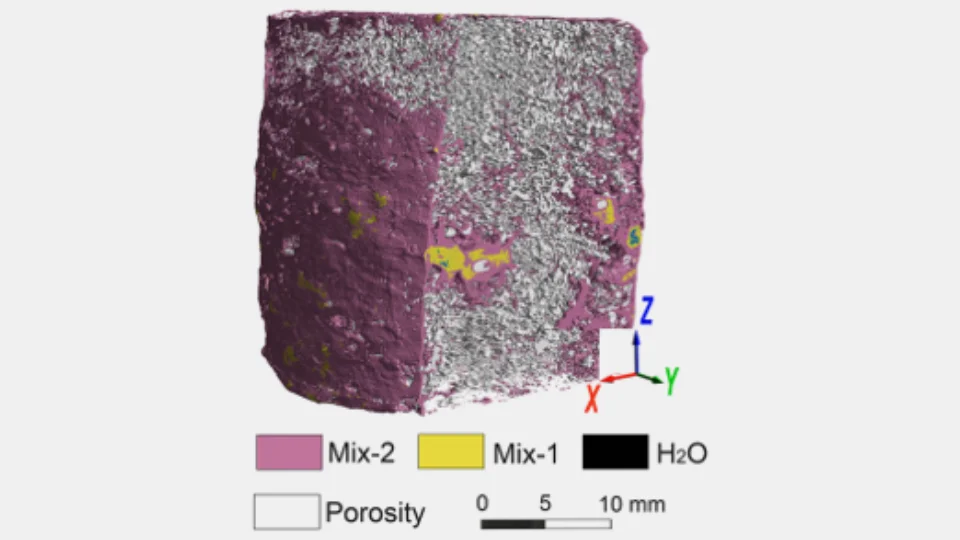
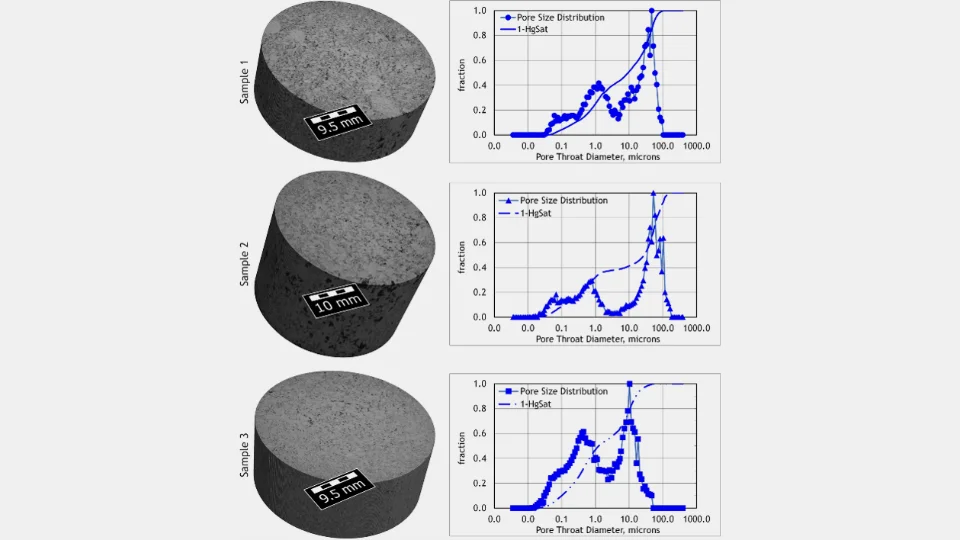
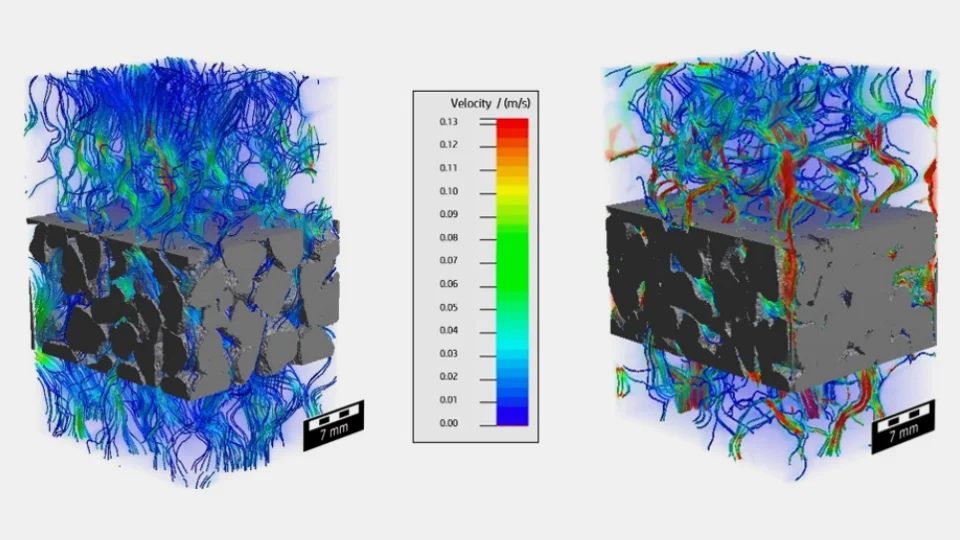
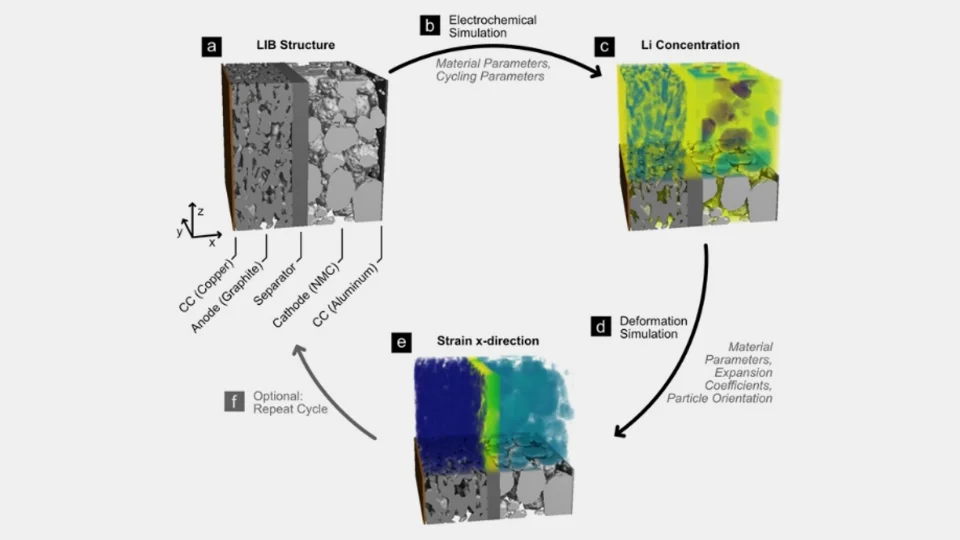
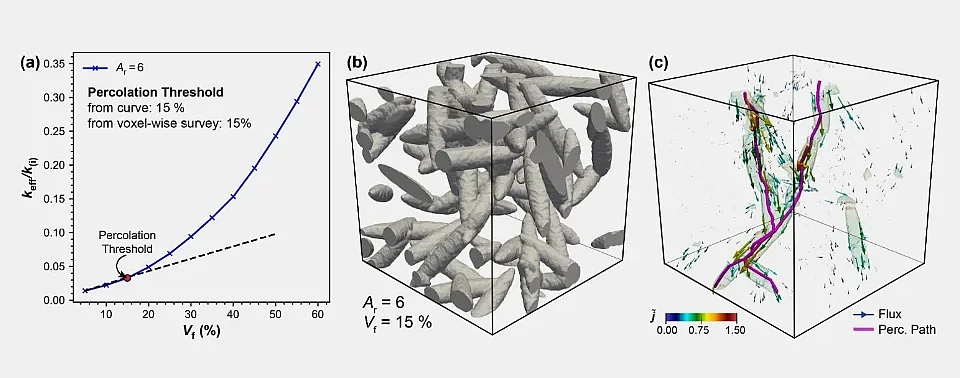
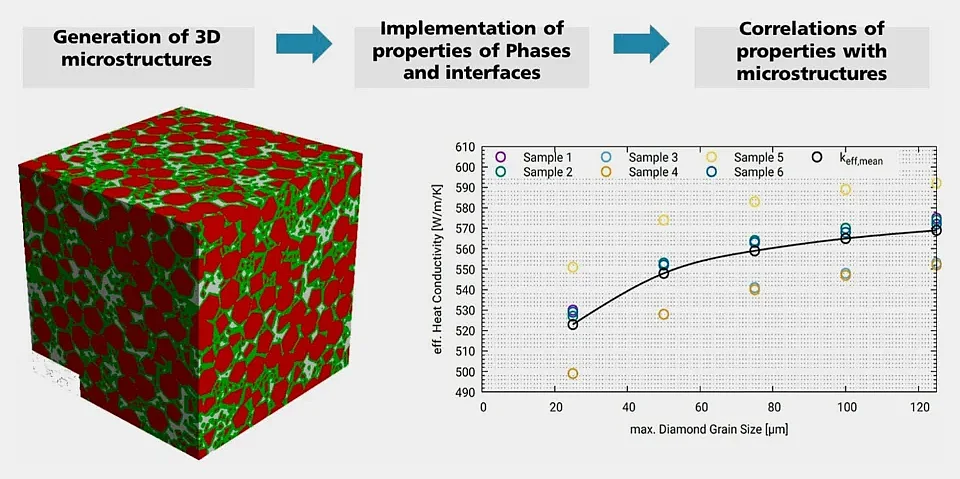
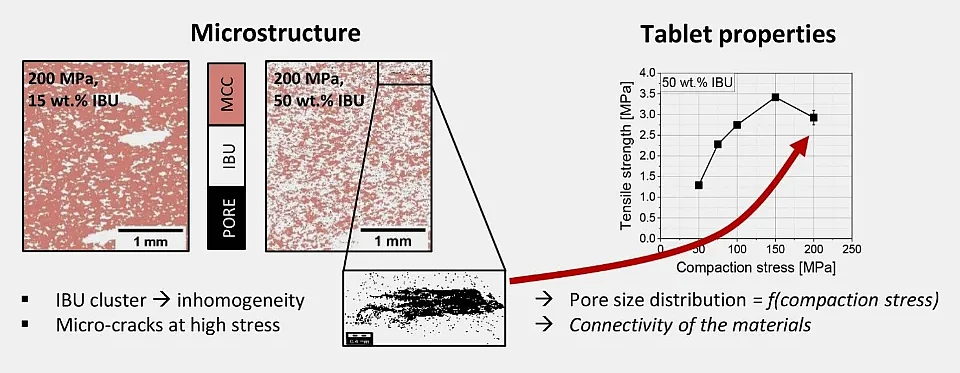
These examples illustrate the diversity of academic research supported by GeoDict, ranging from image-based characterization to structure-property simulation across a wide variety of material systems.
3. What is the GeoDict Academic Innovator Program?
The GeoDict Academic Innovator Program (AIP) is a highly discounted annual license available exclusively to degree-granting universities. It provides access to almost the complete GeoDict software, allowing researchers and students to perform image-based materials analysis, digital material modeling, and physics-based simulation within one professional software platform.
One of the program’s main strengths is its breadth. Research projects often evolve in unexpected directions. A study may begin with image analysis and later require permeability, diffusion, mechanical, electrochemical, or filtration simulations. Rather than limiting users to a small set of application-specific tools, the Academic Innovator Program makes a wide range of capabilities available from the outset, enabling flexible research workflows across multiple disciplines.
Among the capabilities included are:
- Advanced image processing for micro-CT and FIB-SEM datasets
- AI-assisted image enhancement and segmentation
- Quantitative microstructure characterization
- Digital material generation and modification
- Fluid flow and permeability simulation
- Diffusion and transport simulation
- Prediction of mechanical, electrical, thermal, and acoustic properties
- Simulation tools for filtration, batteries, digital rock physics and advanced materials
- Meshing as well as CAD import and export
- Python scripting and workflow automation
A complete list of the included modules, together with detailed descriptions and links to the individual module pages, is available on the Academic Innovator Program webpage.
Academic Innovator Program at a glance
| Feature | Description |
|---|---|
| Annual license | €1999 per year |
| Eligible users | Degree-granting universities |
| Included software | Almost the complete GeoDict software suite |
| License type | Annual node-locked license |
| Technical support | GeoDict Forum |
| Remote access | Included (e.g. Windows Remote Desktop) |
| More information | Academic Innovator Program webpage |
To make the program affordable while still providing access to almost the complete GeoDict platform, only a few limitations apply:
- Academic, non-commercial use only at degree-granting universities
- Maximum simulation size of 1024³ voxels (image import is not limited)
- Parallel computation with up to 8 CPU processes or one GPU
- The FeelMath solver in ElastoDict is not included
- The BEST solver in BatteryDict is not included
- All other functionality in BatteryDict and ElastoDict remains available
- Technical support is provided through the GeoDict Forum
- Available only as an annual node-locked license
For many research projects, these limitations have little practical impact. The Academic Innovator Program still provides a comprehensive environment for image analysis, digital material modeling, and physics-based simulation that would otherwise require multiple specialized software packages.
4. Are there other licensing options for researchers?
Yes. The Academic Innovator Program is one of several licensing options available to research organizations, each designed to support different types of users and projects.
Universities can also purchase standard GeoDict licenses with any combination of modules. These licenses are available with a 75% academic discount compared to commercial pricing and can be configured as node-locked, floating, cloud, or HPC licenses. They offer maximum flexibility for larger research projects, shared facilities, or specialized computing environments.
Researchers at non-profit organizations, as well as university groups carrying out commercial contract research, may be eligible for dedicated non-profit organization licenses (NPO), which are offered with a 50% discount compared to commercial pricing.
For larger institutions, enterprise licenses allow an unlimited number of users within the organization to access GeoDict under a single license agreement. This can be an attractive option for universities or research institutes that wish to make GeoDict available across multiple departments or research groups.
Zusätzlich zu den visuellen Ergebnissen liefert GeoDict umfassende statistische Daten zu jeder Messung. Parameter wie Minimalwert, Maximalwert, Mittelwert, Median und Verteilungsmerkmale können exportiert und für quantitative Vergleiche zwischen Proben herangezogen werden.
Durch die Kombination der geometrischen Charakterisierung mit der Auflösungssimulation gewinnen pharmazeutische Entwickler ein tieferes Verständnis für den Zusammenhang zwischen Mikrostruktur und Leistung. Dies ermöglicht fundiertere Designentscheidungen, unterstützt Qualitätskontrollprozesse und trägt dazu bei, die Formulierungsoptimierung zu beschleunigen, während gleichzeitig der Bedarf an umfangreichen experimentellen Tests reduziert wird.
5. Is there a free option?
A common question is whether GeoDict is available free of charge for research.
Although there is currently no free edition that includes image processing, segmentation, analysis, or simulation capabilities, GeoDict Viewer is available free of charge.
The Viewer allows users to open GeoDict project files, inspect digital structures and simulation results, and share data with collaborators who do not have a full GeoDict license. While it is not intended to replace the software, it is a useful tool for collaboration, teaching, and reviewing results.
6. What about remote use?
Another practical advantage for academic users is that all GeoDict licenses support remote access at no additional cost, for example through Windows Remote Desktop.
This allows GeoDict to be installed on laboratory or departmental workstations while remaining accessible to researchers and students working from their offices, homes, or other locations. Existing licenses can therefore be shared more efficiently without requiring additional software installations.
7. Conclusion
Modern materials research increasingly relies on digital tools that combine image analysis, digital material modeling, and physics-based simulation within reproducible workflows. The GeoDict Academic Innovator Program was created to make these capabilities accessible to a much wider academic community.
Whether the research focuses on batteries, filtration, geological materials, composites, technical textiles, additive manufacturing, biomaterials, or entirely new application areas, GeoDict provides a common platform for investigating how microstructure influences material behavior.
The program is available to degree-granting universities for both research and teaching. Research groups, supervisors, departments, and individual researchers can all apply.
If you would like to explore whether GeoDict is suitable for your work, you can request an Academic Innovator Program trial license or learn more about the program on the Academic Innovator Program webpage