Validation for a Granular Digital Twin: From 2D to 3D
Validation: Granular Digital Twin GeoApp
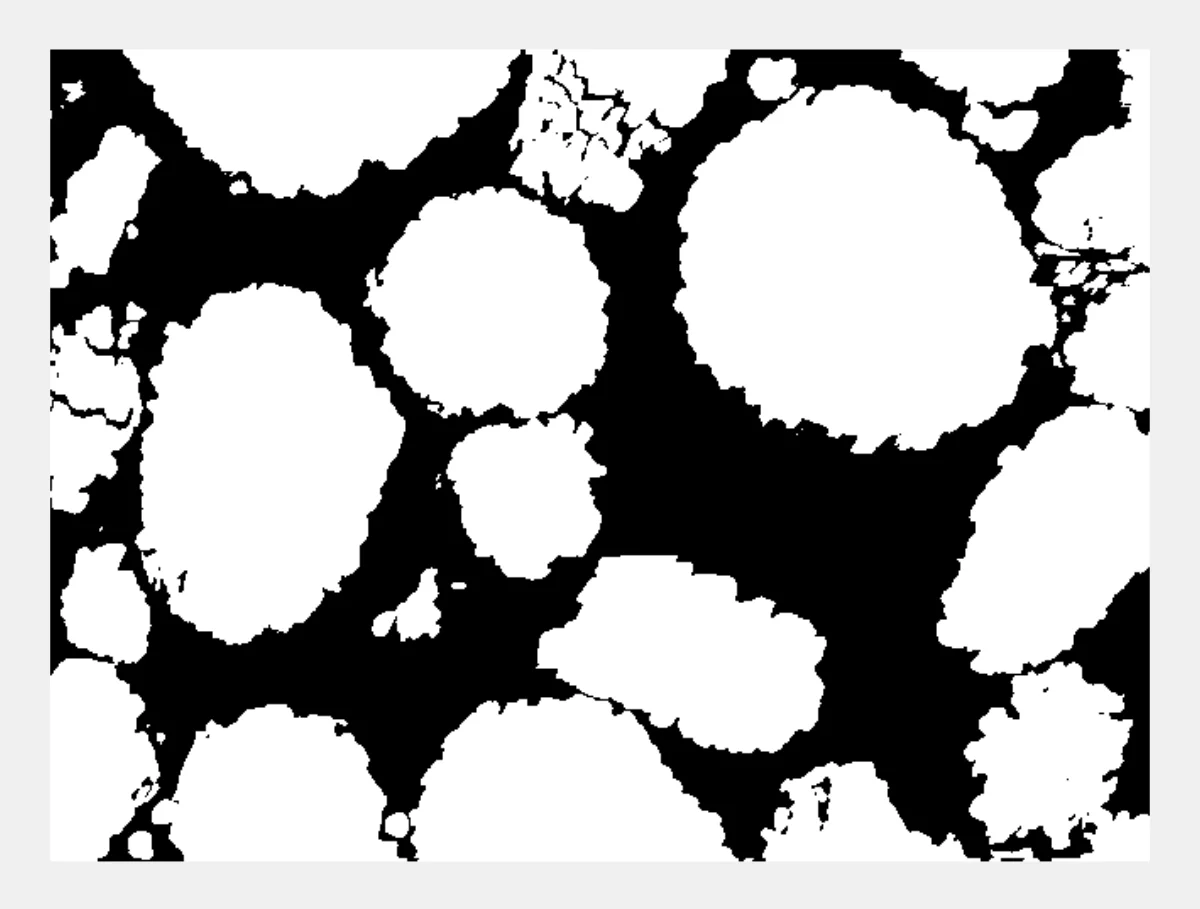
In this case, the full 3D geometry is known from a high-resolution FIB-SEM scan. However, only a single 2D slice (Fig. 1) was used to generate the digital twin. Based on this slice, a 3D microstructure model is automatically optimized to match the pore size distribution, solid particle size distribution, and specific surface area.
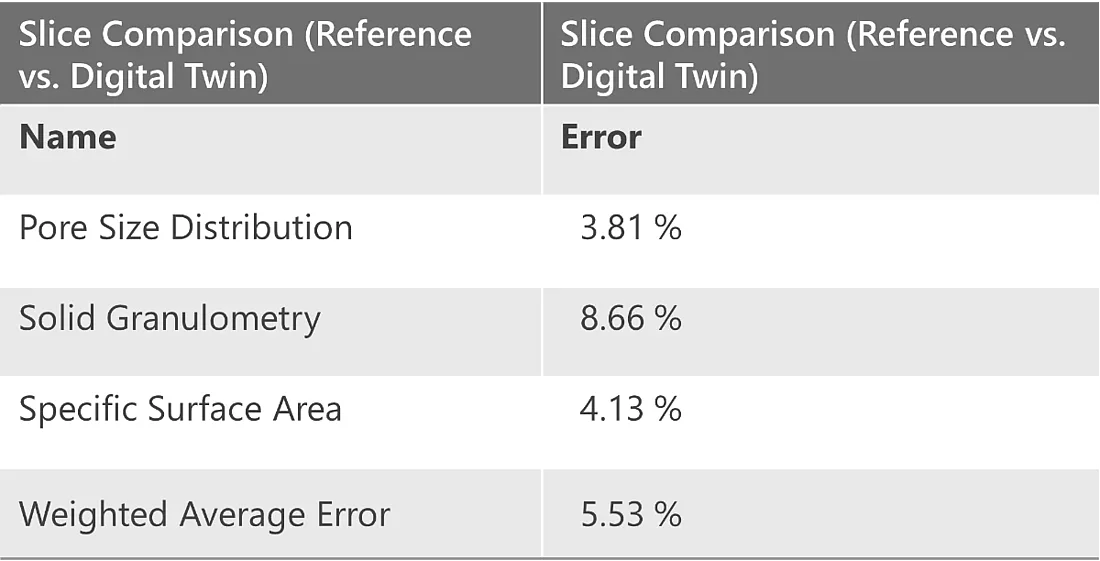
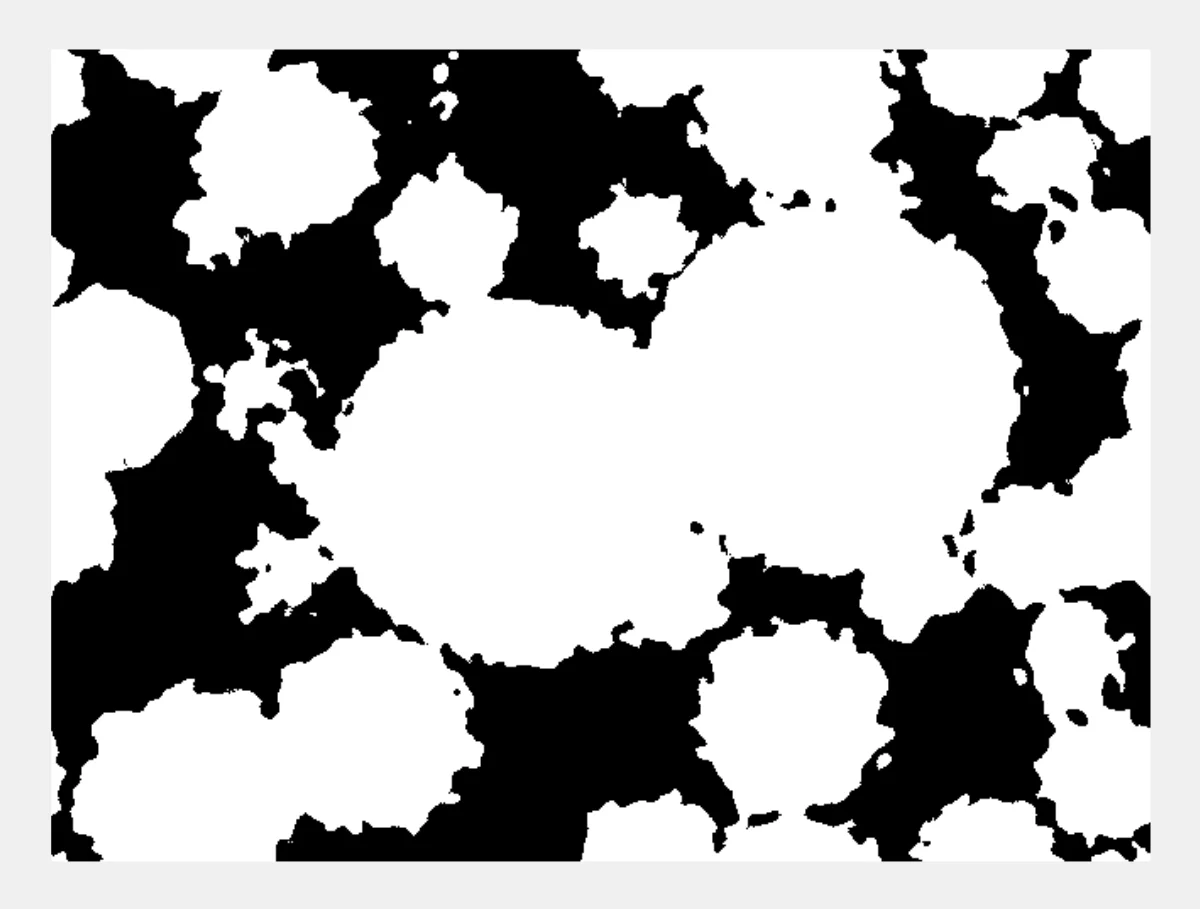
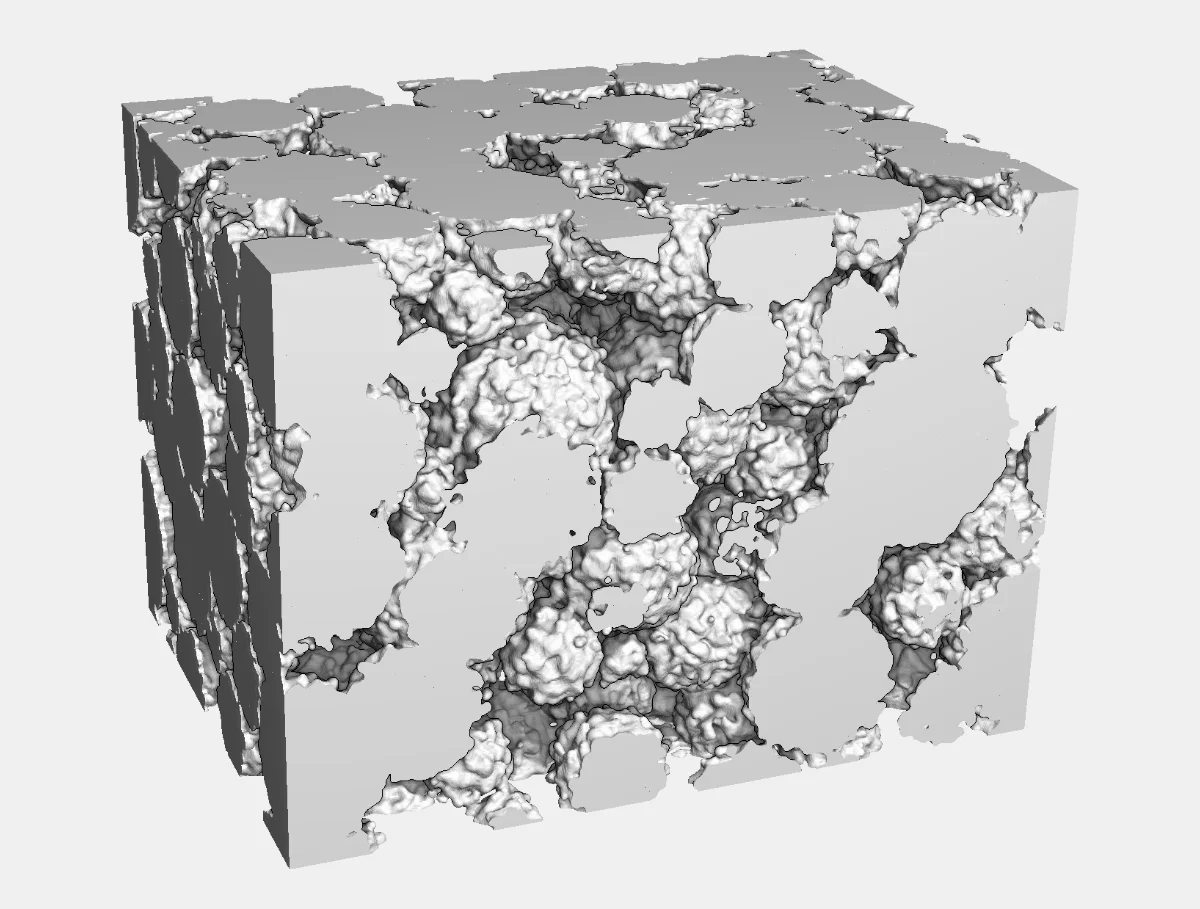
The resulting deviations for these geometric descriptors, demonstrating the close agreement between scan and model, are summarized in Table 1. The reconstructed digital twin is shown both as a 2D slice in Fig. 2 and as the full 3D geometry in Fig. 3.
A strong visual agreement between the real scan and the digital twin is observed. For quantitative validation, the tortuosity factor—a purely 3D transport property—was computed for both structures.
The reference FIB-SEM geometry yields a value of 1.79, while the digital twin gives 1.62. The deviation of approximately 10% confirms the close structural agreement and demonstrates the capability to generate accurate 3D digital twins from 2D image data.